DECEMBER 3
THE FIRST SMS IN HISTORY
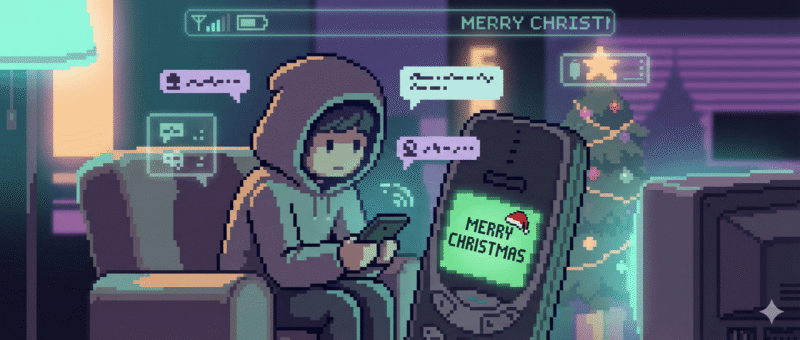
On December 3, 1992, engineer Neil Papworth sent the first SMS in history.
From his computer to his boss's phone, the simple phrase — "Merry Christmas" — inaugurated a new form of human communication.
No emojis.
No two-minute audio messages.
No stickers saying "good morning" with flowers and glitter.
Just 15 characters that forever changed how we connect.
SMS was not created for everyday conversations.
It was intended for network alerts from carriers — technical, cold, robotic messages.
But humans, stubborn and social creatures, transformed a technical resource into affective language.
SMS paved the way for:
- Telegram
- iMessage
- Discord
- DMs
- Chats
- Educational apps
- Bots
And most importantly: it created the quick text culture that changed advertising, education, politics, community building, storytelling… and our relationships forever.
For StoryMode students, the first SMS is much more than technological nostalgia. It's a milestone in:
-
✔ Concise writing
If you can't explain something in a few words, you might not have understood it yet. -
✔ Communication design
Every message has intention, rhythm and clarity — and those skills are gold in the digital world. -
✔ Conversation UX
Short interactions change behavior, triggers, memory and engagement. -
✔ Everyday creativity
From the "vanished hello" to a DM pitch: messages shape opportunities. -
✔ The beginning of the attention economy
SMS trained the brain to read fast, reply fast, and think fast.
Because every new medium kills the previous one and creates a new world — and SMS killed silence.
"The 15-Character Messenger"
🧩 "Synthesis is a superpower."
Ask students to create impact messages with up to 15 characters.
Deben transmitir:
- una idea poderosa
- un llamado a la acción
- o una emoción clara
Después, transformen esas microfrases en:
posts cortos,
notificaciones,
pantallas de app,
microcopy para UX.
Es un ejercicio brutalmente eficaz de síntesis creativa.