💡 Historical & Cultural Context
Collector’s Day celebrates the people who preserve memories through objects — rare coins, stamps, vinyls, comics, cards, action figures, old cameras, miniatures, classic games, or honestly even bottle caps if that’s your vibe.
Collecting is literally as old as civilization itself.
But today it hits totally different layers:
-
Digital relic markets (NFTs, skins, in-game rare items)
-
Cultural archiving (digital restoration, online museums, 4K scans)
-
The nostalgia economy (reboots, remakes, special editions)
Collecting is not hoarding.
It is curation, memory, purpose, and above all, love for history — your history, the world’s history, or the lore of that 1987 anime franchise that probably only three people remember.
🧠 StoryMode Connection
Collecting is a core creative-education skill:
✔ Mental organization
Mapping, cataloging, prioritizing, noticing patterns.
✔ Curation
Same skill as choosing the best take, the best story arc, the best visual reference.
✔ Perseverance
Hunting that rare piece requires patience, focus, and strategy — which Gen-Z seriously needs to master for the creative economy.
✔ Identity
Every collection is a personal manifesto, an emotional operating system.
✔ Creative Economy
The collectibles market moves billions: games, cards, movies, action figures, limited editions.
Creators get this and turn ideas into art-products, memorable experiences, and passionate communities.
Reward of the Day
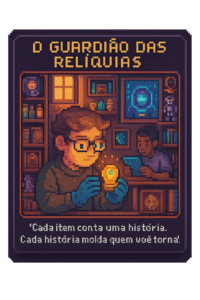
Realizing that collecting is about preserving meaning.
And meaning is basically the most valuable currency on the planet.
📚 GLOSSARY
-
Collecting: Preserving objects that have historical, cultural, or emotional value.
-
Curation: Selecting and organizing items in a way that actually builds meaning.
-
Rare items: Objects that are hard to find and valued because of history or scarcity.
-
Nostalgia economy: The market that turns memories into cultural products.
-
Digital archiving: Preserving works, media, and documents in digital form.
-
Limited editions: Low-quantity releases that boost exclusivity and value.
-
Cultural relics: Objects that represent specific moments or identities of their era.
🧠 EdTech.Cool StoryMode Stamp
Bloom: Analyze / Evaluate / Create
UNESCO: Cultural Heritage + Identity
OECD: Curation, Systems Thinking, Digital Culture
ISTE: Knowledge Constructor + Creative Communicator
💬 PBL Tip for Educators
Ask each student to bring (or photograph) an item they collect — or something they would collect.
Then have them:
Create a story around the object
Explain its emotional value
Connect it to a historical or cultural moment
Build a “mini creative exhibition” in class